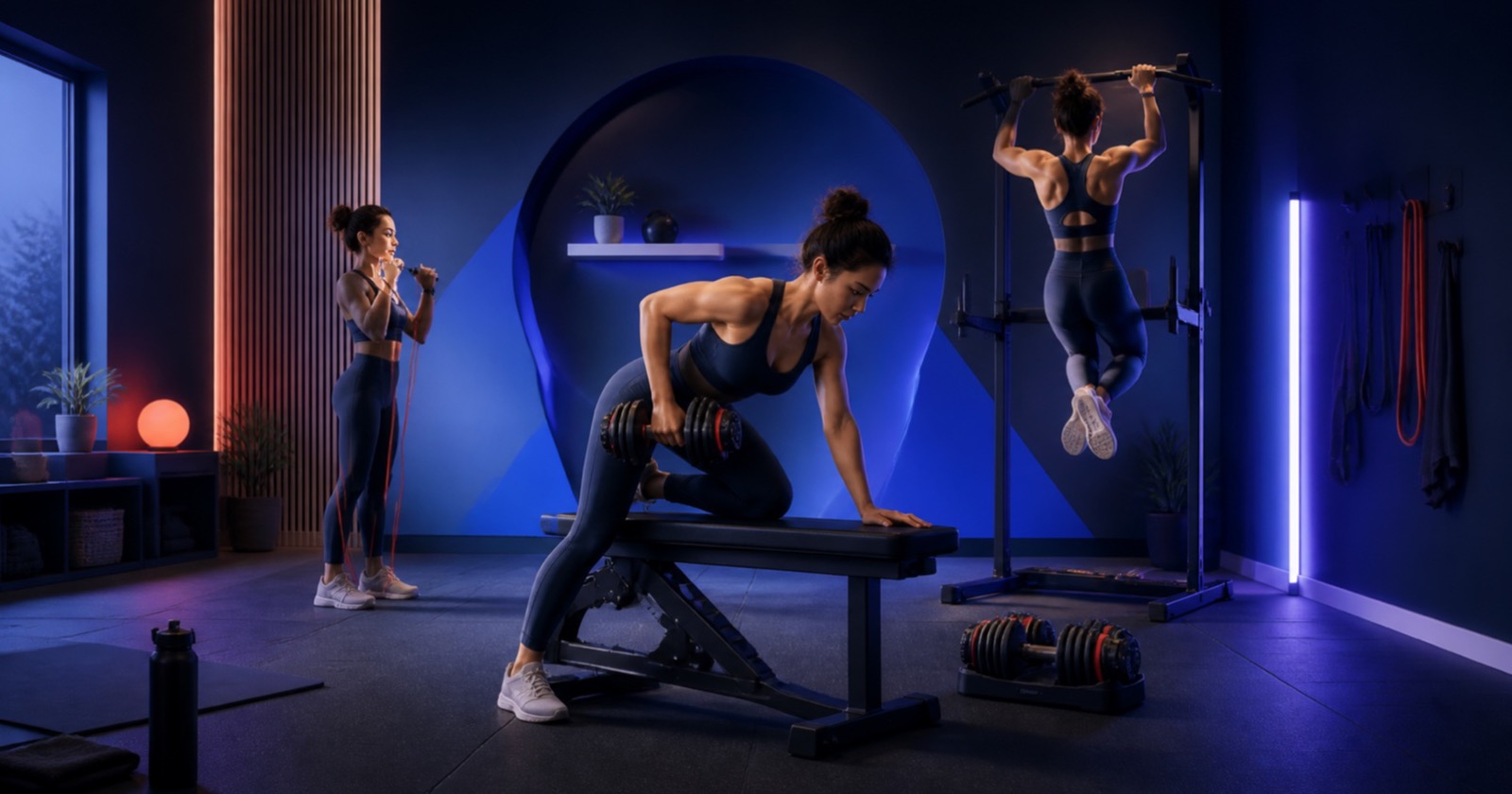
Home training is often presented as either bodyweight-only or a miniature commercial gym. Most effective setups live between those extremes.
Start with movement coverage
Ask whether you can perform a push, a pull, a knee-dominant leg movement, a hip-dominant movement and useful trunk work. Adjustable dumbbells, bands, a stable bench and a pull-up option can cover a great deal, but your space and preferences decide the right mix.
Describe what exists today
Add your current equipment to a home location in AnyGear. Do not include the barbell you may buy next month. Accurate limitations help the planner choose startable sessions.
As the setup grows, update the location. New gear should solve a repeated training problem, not merely add another object to store.
Use the small-space advantage
At home, everything is usually nearby. That can make transitions and accessory supersets exceptionally efficient. Organize the area so the equipment you combine can be reached safely without constant rearrangement.
A complete home gym is not the goal. A dependable environment that supports your weekly plan is.