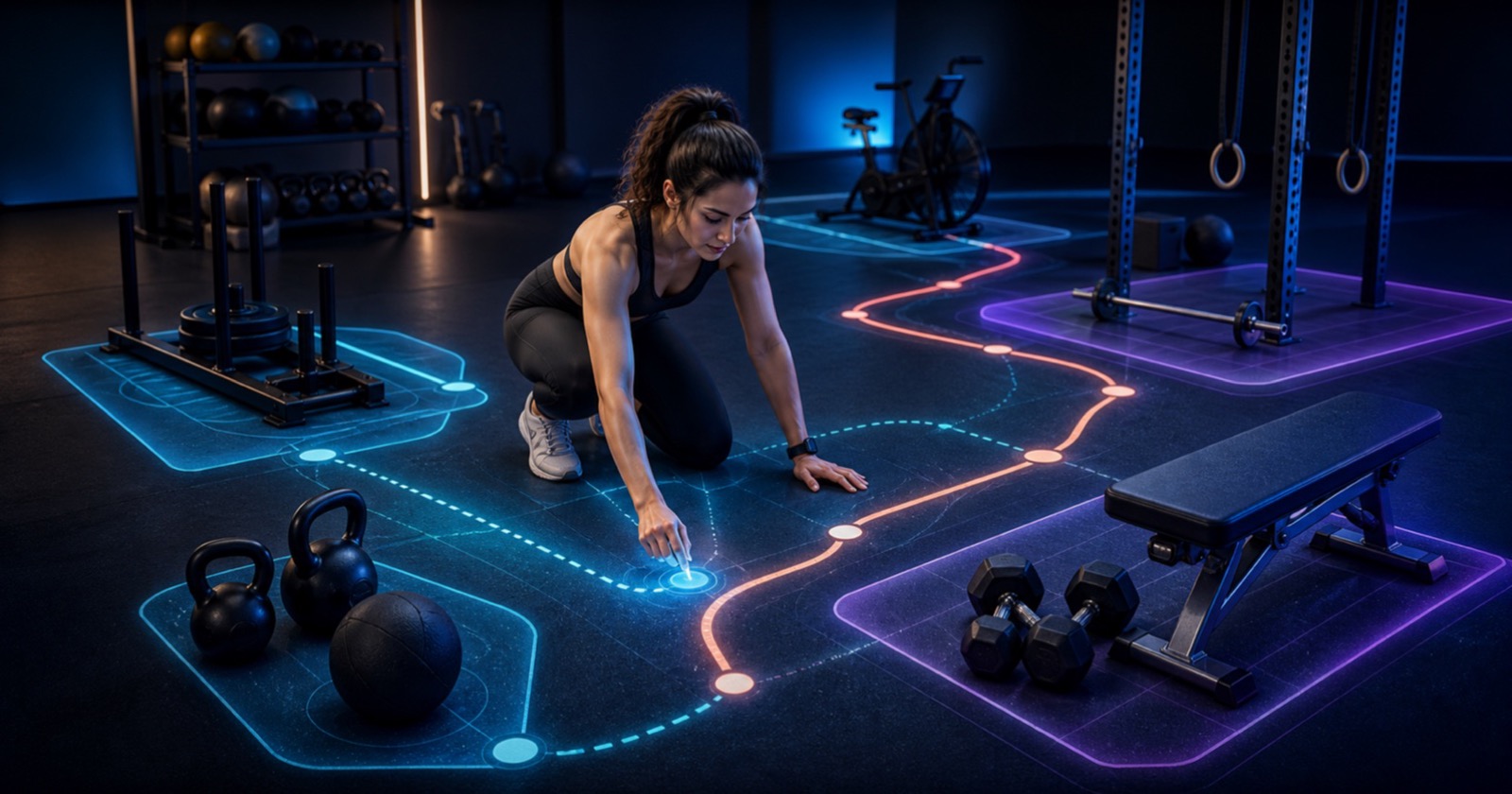
An equipment checklist answers one question: “Can I do this exercise here?” It does not answer the equally important question: “Can I move through this workout without wasting half the session?”
Why location inside the gym matters
A cable station beside a pull-up bar is a useful pairing. The same cable station on another floor may be a terrible partner. AnyGear lets a training location describe equipment by zone and position, so planning can respect physical distance instead of treating every available machine as equally close.
You do not need an architectural drawing. Start with broad, useful zones such as dumbbells, cables, leg machines, racks and cardio. Then place equipment in roughly the same order you encounter it.
A five-minute setup that keeps paying back
- Create the location you use most often.
- Add only equipment you would realistically choose.
- Group nearby stations into the same zone.
- Use position order to describe their rough sequence.
- Update the map when the gym moves equipment.
The goal is not perfect data. The goal is enough spatial context to avoid ridiculous transitions. A simple, honest map is more valuable than a detailed inventory that no longer matches the room.
Tip: map your habits too
If a machine is always occupied or you dislike using it, leaving it out can be more accurate than marking it available. AnyGear works best when your location represents the gym you can actually train in, not the brochure version of it.