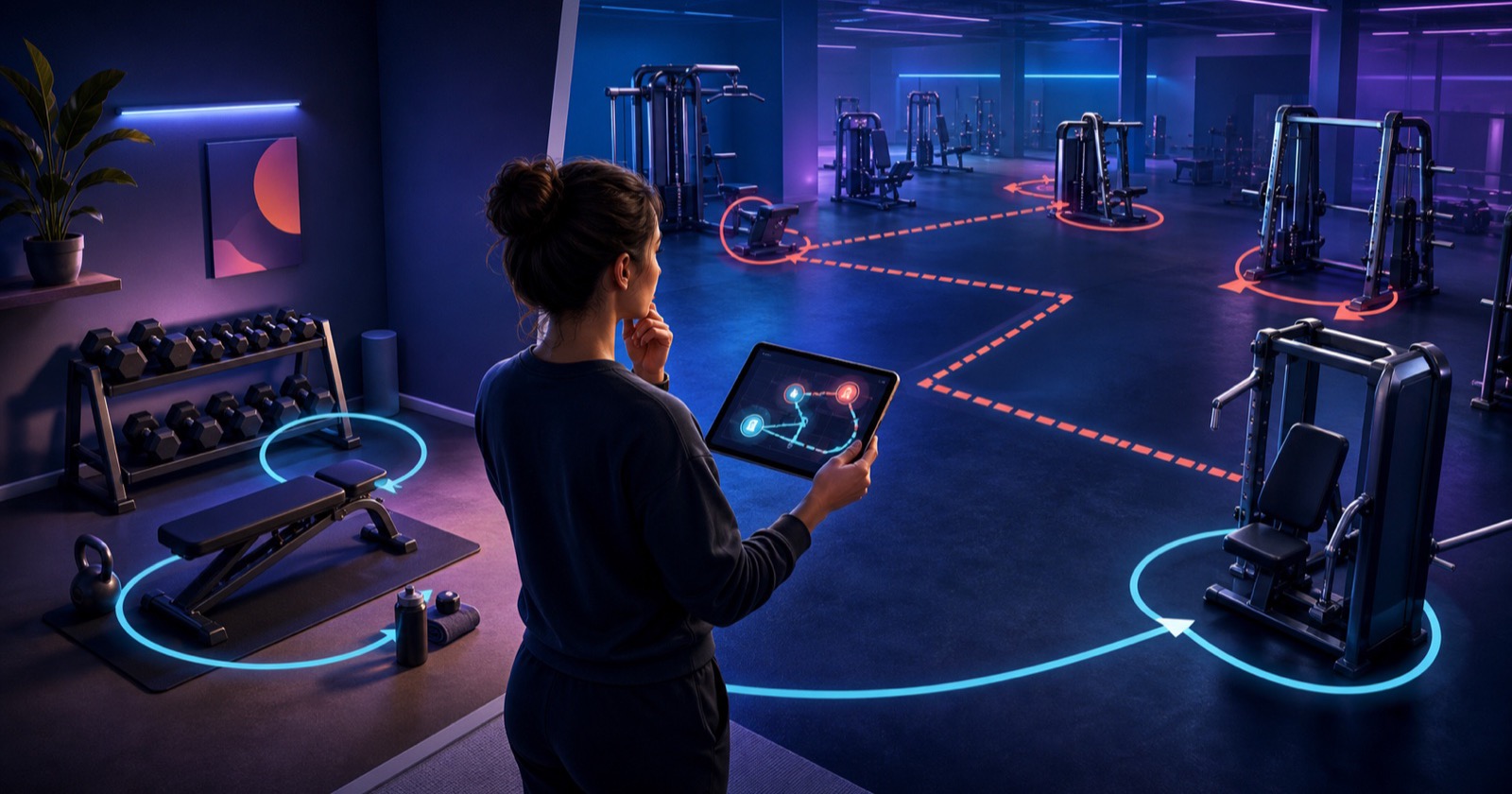
I did not start AnyGear because the world needed another workout log. I started it because my own training kept exposing the same gap: I trained partly at home and partly in a commercial gym, but every app I tried treated those places as interchangeable lists of equipment.
The problem was not exercise selection
Most apps could suggest a chest exercise or count a set. The trouble began when a generated workout met the real gym floor. A “smart” superset might pair two good exercises on machines at opposite ends of the building. By the time I walked across the gym, waited for the second station and returned, the superset had stopped being a superset.
At home, the opposite problem appeared. A plan would assume equipment I did not own, or ignore the useful combinations available in a small space. Switching between home and gym often meant rebuilding the workout by hand.
The idea behind AnyGear
I wanted the training system to understand where equipment is, which pieces belong together and what is actually available today. A gym should be more than a name. It should have zones, equipment and a practical order. A home setup should be equally valid, even if it contains only a bench, a few dumbbells and bodyweight movements.
That is the foundation of AnyGear: plan around the person, the place and the moment. Exercise science still matters, but a plan is only useful when you can perform it without fighting the room.
Built because I needed it
I could not find an app that handled this mixed reality well enough, so I made my own. AnyGear began as a solution to awkward supersets and fragmented training histories. It is growing into one connected system for planning, logging, coaching and learning from every place you train.
Evidence note
Superset training can be genuinely time-efficient: a 2025 systematic review and meta-analysis found shorter sessions with broadly similar long-term adaptations. That evidence motivated the opposite question too: if an app creates an impractical pairing, the theoretical efficiency is lost before physiology is even the issue.