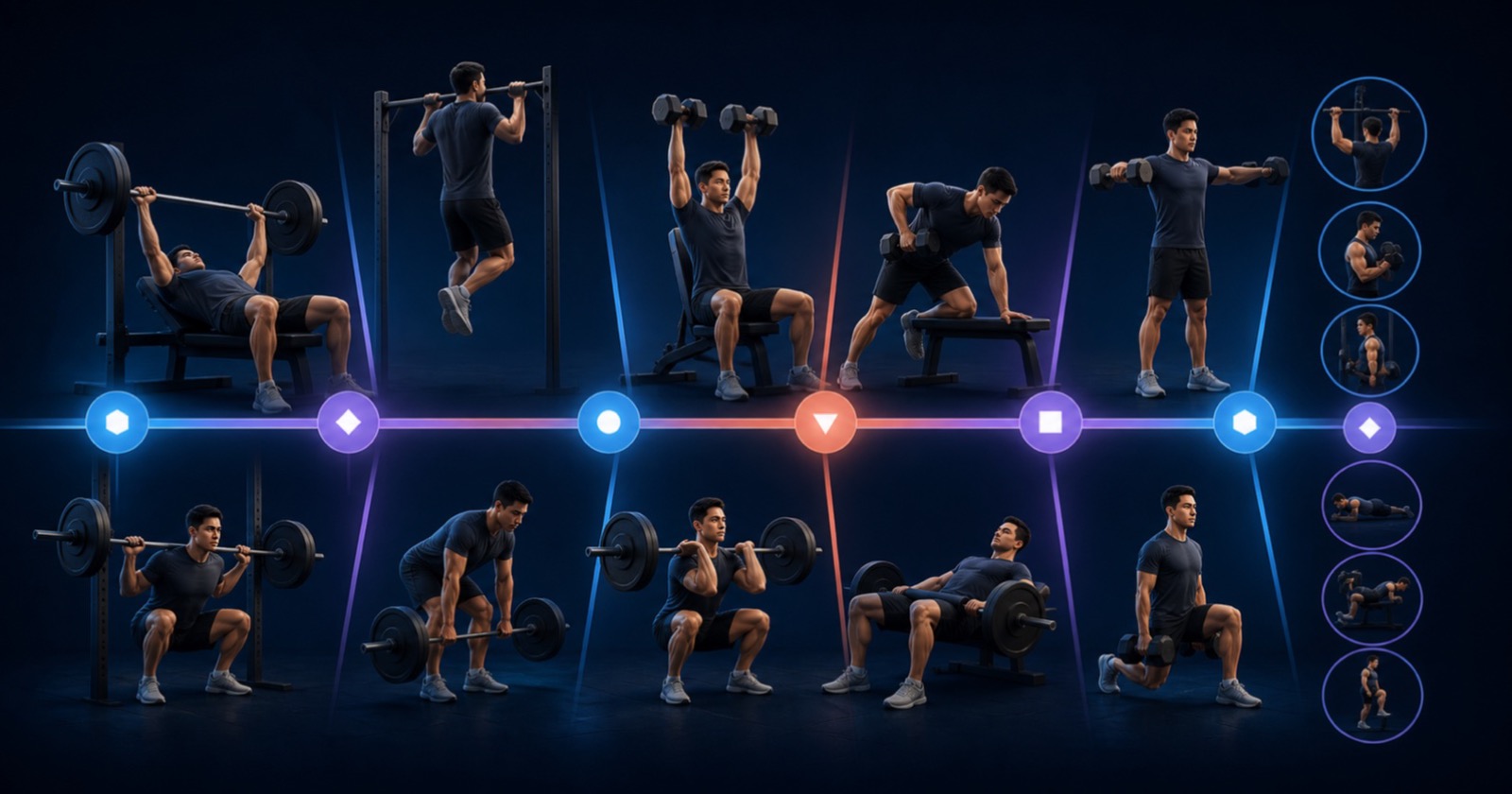
A split is useful when it makes the week easier to execute. Upper/lower training does that by grouping related movement patterns without requiring a separate day for every muscle.
Clear focus, flexible frequency
AnyGear's upper/lower generation separates primary work from accessories and keeps accessory targets in appropriate ranges. With four sessions, each half can appear twice. With fewer sessions, the pattern can continue across weeks rather than forcing a reset every Monday.
What to watch
- Keep the main strength movement early.
- Use accessories to fill gaps, not duplicate everything.
- Match total work to the session duration.
- Let recent performance guide load instead of chasing a fixed weekly number.
An upper day is not “every upper-body exercise,” and a lower day is not permission to exhaust every leg machine. Each session still needs priorities.
The best split is the one you can repeat
If your schedule reliably supports three sessions, build around three. AnyGear should adapt the structure to your rhythm; your life should not have to imitate a template written for someone else.
Evidence note
A randomized trial comparing split-body and full-body routines reported similar strength and muscle outcomes when weekly work was comparable. A broader frequency meta-analysis also emphasizes the importance of weekly training volume. These findings support choosing a split for execution and distribution—not claiming one label is universally best.